
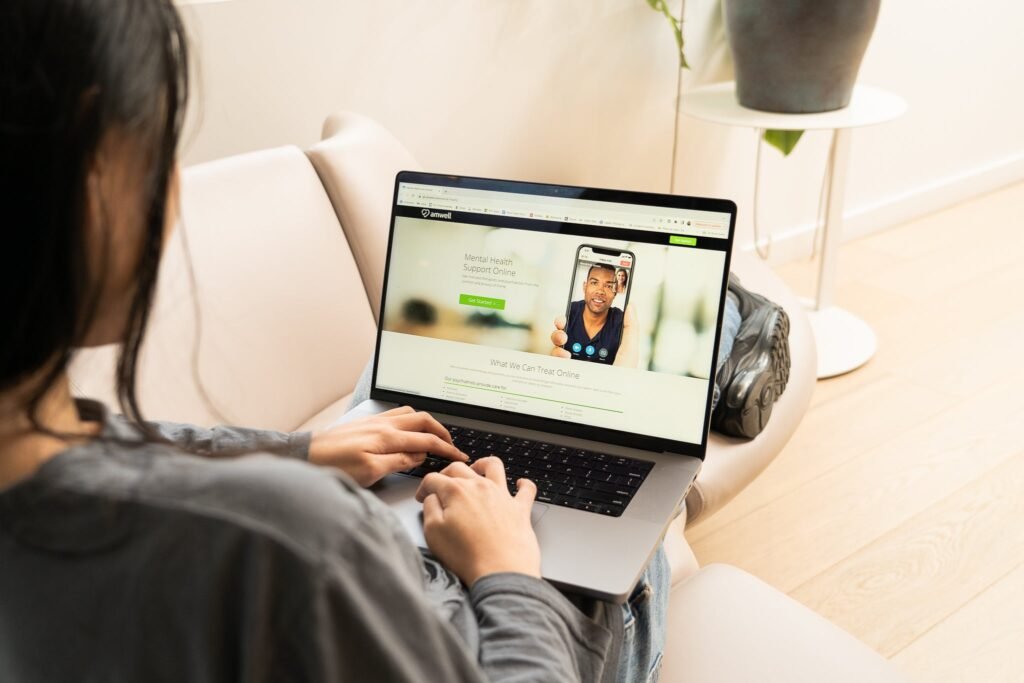
Mental health care has become significantly more accessible thanks to online therapy platforms — but the sheer number of options can make choosing the right one overwhelming. In-person therapy in the United States costs an average of $174 per session when paid out of pocket, putting consistent care out of reach for many people.
Online therapy platforms have changed that equation, offering flexible, often more affordable access to licensed mental health professionals from home. This guide compares the best online therapy platforms in the USA for 2026, breaking down cost, insurance coverage, and which option fits different needs.
Why Consider Online Therapy?
Online therapy (also called teletherapy or telehealth therapy) offers several advantages over traditional in-person care:
- Lower cost in many cases compared to out-of-pocket in-person sessions
- No geographic limitations — access licensed therapists regardless of location
- Flexible scheduling, including evenings and weekends
- Multiple communication formats — video, phone, live chat, or messaging
- Faster access — many platforms match you with a therapist within days, compared to weeks-long wait lists for in-person providers
That said, online therapy is not appropriate for psychiatric emergencies, severe mental illness requiring intensive intervention, or court-mandated treatment in some cases. Always check with a provider about whether virtual care fits your specific situation.
Best Online Therapy Platforms — 2026 Comparison
1. Better Help — Best Overall Value (Cash Pay)
Better Help ranked as the top overall online therapy platform after extensive testing across 87 platforms and survey data from over 1,300 real users.
- Cost: $65–$100 per week ($260–$400/month), billed monthly
- Insurance: Limited — some providers may be in-network with select plans as of 2026, but coverage is not yet widespread
- Format: Video, phone, live chat, and messaging
- Best for: Individuals, couples, teens, and LGBTQIA+ communities seeking flexible, comprehensive care
- Standout features: Group therapy sessions and educational classes included at no extra cost; financial aid available for qualifying users
Better Help remains the better choice if you are paying out of pocket and want the most value, since its all-inclusive subscription covers messaging, live sessions, and extras without additional fees.
2. Talk space — Best for Insurance Coverage
Talk space stands out as the strongest option for users who want to use insurance to offset therapy costs.
- Cost with insurance: Average copay of $15–$30 per session (25% of surveyed users reported a $0 copay)
- Cost without insurance: Starting around $69/week for messaging-only plans, up to $109/week for video, messaging, and workshops
- Insurance accepted: Aetna, Anthem, Cigna, Optum, Regence, TRICARE, Blue Cross Blue Shield, and Medicare Part B
- Best for: Anyone wanting to verify insurance coverage before signing up, or needing medication management alongside talk therapy
- Standout feature: Includes psychiatric services and medication management — a key differentiator from Better Help
A major advantage of Talk space is that it lets you check your specific insurance coverage before creating an account, removing the guesswork that comes with many other platforms.
3. Online-Therapy.com — Best for CBT-Focused Treatment
Online-Therapy.com is built specifically around Cognitive Behavioral Therapy (CBT), a well-researched, structured approach for changing unhelpful thought patterns.
- Best for: Users who want a structured, evidence-based program rather than open-ended talk therapy
- Format: Interactive worksheets, activity plans, journaling, and daily therapist feedback, plus optional live video/voice/text sessions
- Standout feature: Lower-cost plans built around messaging and self-guided modules, with the option to add live sessions
This platform is ideal for people who respond well to structured, skills-based approaches like CBT rather than purely conversational therapy.
4. Bright side Health — Best for Combined Therapy + Psychiatry
Bright side Health rounds out the top tier of tested platforms, particularly for users seeking integrated mental health and medication support.
- Best for: Patients who may benefit from both therapy and psychiatric medication evaluation in one platform
- Format: Video sessions with licensed therapists and psychiatric providers
- Standout feature: Data-driven treatment plans with outcome tracking over time
5. Grow Therapy — Best Insurance-First Directory
Grow Therapy takes a different approach, functioning as an insurance-focused directory that connects users directly with in-network providers.
- Insurance accepted: 125+ plans, including Medicare and Medicaid in select states
- Cost: Transparent, upfront rates shown for each individual provider before booking
- Best for: Users who prioritize using insurance and want full transparency on costs before committing
- Note: Functions more as a provider-matching directory than an all-in-one app like Better Help or Talk space
Better-help vs Talk space: The Direct Comparison
This is the most common comparison people search for, so here is a side-by-side breakdown:
| Factor | Better Help | Talk space |
|---|---|---|
| Out-of-pocket cost | $65–$100/week | $69–$109/week |
| Insurance accepted | Limited, expanding | Yes — major providers |
| Medication management | Not offered | Yes |
| Group sessions/classes | Included free | Costs extra (Talk space Go) |
| Sign-up time | ~15 minutes | 10–20 minutes |
| Best for | Out-of-pocket payers wanting value | Insurance holders, those needing psychiatry |
Bottom line: If you have in-network insurance, Talk space will almost always be the more cost-effective option. If you are paying out of pocket, Better Help tends to offer more value for the price, especially with its included extras.
How Much Does Online Therapy Cost in 2026?
Pricing varies significantly based on payment method and platform:
| Payment Method | Typical Cost Per Session/Week |
|---|---|
| Out-of-pocket, major platforms | $60–$100+ per week |
| With commercial insurance (in-network) | $15–$30 copay per session |
| Sliding scale platforms (Open Path Collective) | $30–$60 per session |
| In-person therapy, no insurance | ~$174 per session |
| In-person therapy, with insurance | $23 (in-network) to $53 (out-of-network) average |
Budget-friendly alternatives worth knowing about: Open Path Collective offers sliding-scale sessions as low as $30, and Inclusive Therapists or Alma can help locate insurance-friendly or sliding-scale providers in your area.
Does Insurance Cover Online Therapy?
Coverage varies by platform and individual plan:
- Talk space, Grow Therapy, and Alma have the strongest insurance integration, working directly with major carriers including Aetna, Cigna, Blue Cross Blue Shield, and Medicare.
- Better Help is still primarily cash-pay, though it has been gradually expanding in-network partnerships with select providers in select states.
- Always verify directly with the platform and your insurance provider, since coverage rules and in-network status change frequently — sometimes month to month.
Tip: Call your insurance company and ask specifically: “Does my plan cover teletherapy, and which platforms or providers are in-network?” This single question can save hundreds of dollars per month.
How to Choose the Right Online Therapy Platform
Choose Better Help if: You are paying out of pocket and want maximum value, including free extras like group sessions and educational courses.
Choose Talk space if: You have insurance you want to use, or you need medication management alongside talk therapy.
Choose Online-Therapy.com if: You respond well to structured, skills-based approaches like CBT and want self-guided tools between sessions.
Choose Grow Therapy or Alma if: Finding an in-network provider with full price transparency is your top priority.
Choose a sliding-scale option (Open Path Collective) if: Cost is your primary barrier and you do not have insurance coverage for therapy.
Frequently Asked Questions
Q: Is online therapy as effective as in-person therapy? Research generally shows comparable outcomes between online and in-person therapy for most common concerns like anxiety, depression, and relationship issues. Severe psychiatric conditions may still require in-person or more intensive care.
Q: Can online therapists prescribe medication? Only platforms with licensed psychiatric providers (such as Talk space and Bright side Health) can prescribe medication. Platforms focused purely on talk therapy, like Better Help, do not offer this service.
Q: How quickly can I start therapy online? Most platforms match you with a therapist within 24–48 hours of completing an intake questionnaire, significantly faster than typical in-person wait lists.
Q: What if I don’t connect with my assigned therapist? All major platforms allow you to switch therapists at no additional cost if the initial match is not a good fit. This is one of the key advantages of online platforms over traditional practices.
Q: Is online therapy confidential? Reputable platforms are HIPAA-compliant and use encrypted communication. Always verify a platform’s privacy policy before sharing sensitive information.
Q: Can I use online therapy for couples or family counseling? Yes. BetterHelp, Talkspace, and several other platforms offer dedicated couples therapy options (BetterHelp’s ReGain platform, for example), and some also support family sessions.
Final Verdict: Best Online Therapy by Need
| Need | Best Platform |
|---|---|
| Best overall value (cash pay) | Better Help |
| Best for using insurance | Talk space |
| Best for structured CBT | Online-Therapy.com |
| Best for therapy + psychiatry | Bright side Health / Talk space |
| Best insurance-first directory | Grow Therapy |
| Best low-cost option | Open Path Collective |
Mental health care is not one-size-fits-all, and the “best” platform depends heavily on your budget, insurance situation, and treatment needs. Most platforms offer free initial consultations or trial periods — take advantage of these before committing to a longer subscription.
More Read: Best Medicare Advantage Plans in the USA (2026): Compare Top Companies & Save on Coverage